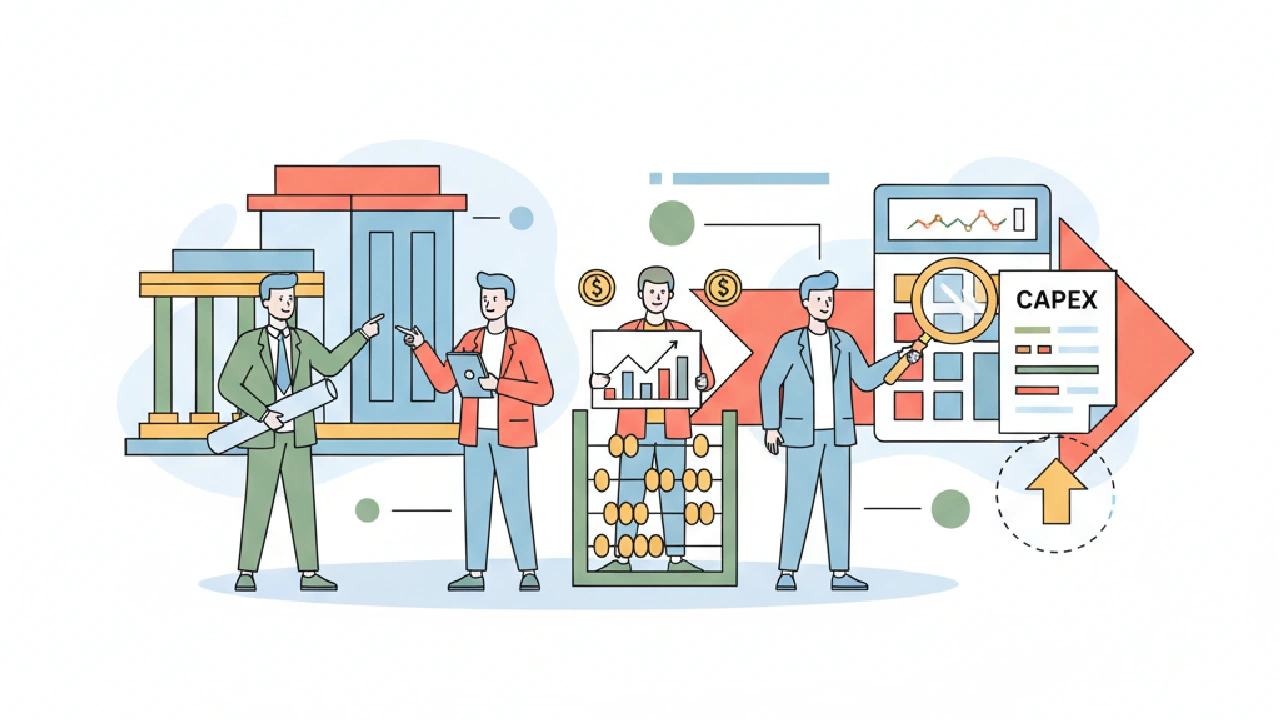
To build a capex budget during CRE due diligence, start from the property condition report and your own inspection notes, sort every finding into immediate repairs, short term needs, hold period replacements and planned value-add work, get contractor pricing on the big items, and put each line into a year by year schedule that ties to your underwriting and your offer price. The goal is a budget you can defend to partners and use in a price conversation with the seller, not a guess buried in a spreadsheet tab. This guide is general education, not engineering, construction cost, legal, tax or investment advice. Have a qualified inspector, contractor and your own advisors review any property and any budget before you commit capital.
What a capex budget is for in an acquisition
Capital planning for a CRE acquisition answers one question: how much money, beyond the purchase price and closing costs, does this building need over the hold, and when? That number feeds three decisions:
- Your equity check. Money you plan to spend in year one usually has to be raised or reserved at closing, so it belongs in your sources and uses.
- Your returns. Capex reduces cash flow in the years it is spent, so it changes cash on cash and IRR. See cap rate vs cash on cash vs IRR.
- Your price. Material, unexpected repairs found in diligence are one of the usual reasons buyers ask for a price change or credit. See how a retrade works.
This post covers the budget you build while under contract. For how to manage reserves, TI and leasing costs after you own the asset, see the CRE asset management checklist.
Where the numbers come from
A capex budget is only as good as its inputs. Pull from every source you can during your due diligence period:
- Property condition assessment (PCA). Many buyers and lenders use a PCA prepared under ASTM E2018-24, the standard guide for baseline property condition assessments. Under that guide the consultant does a walk-through survey, document review and interviews, and the property condition report includes opinions of cost for suggested remedies of observed physical deficiencies. It is a visual, non-intrusive baseline, not a full engineering study, so treat its costs as a starting point.
- Specialist inspections. Roof, HVAC, plumbing, electrical, structural, parking lot or elevator inspections when the PCA flags a system or the asset type calls for it.
- Contractor bids. Real quotes on the largest items. A bid in hand is much stronger support than a report estimate when you talk price.
- Seller records. Past capex, warranties, service contracts, permits and the T12's repair lines. See what a T12 shows.
- Leases. Who pays for roof, structure and building systems varies by lease. Read them before you assume a cost is yours or the tenant's.
- Your business plan. Unit or suite upgrades, signage, amenity or exterior work you plan to do on purpose to raise rents.
Sort every finding into four buckets
Most capex budgets get easier once each line sits in one bucket. The bucket decides how you fund it and how you use it in negotiation.
| Bucket | What goes in it | How buyers usually handle it |
|---|---|---|
| Immediate repairs | Life safety items, active leaks, failed systems, code or lender required fixes | Fund at or right after closing; strongest basis for a price credit or seller repair |
| Short term needs | Items near the end of their useful life that will need work soon after you buy | Budget in year one or two; include in your equity raise |
| Hold period replacements | Roofs, HVAC units, paving and other components that will wear out during your hold | Spread across the schedule or cover with an ongoing reserve |
| Value-add capex | Upgrades you choose to make to raise rent or occupancy | Tie each item to the rent or occupancy it supports in your pro forma |
Keep the first two buckets separate from value-add work. Sellers rarely accept a credit for upgrades you want to make, but they may engage on deficiencies a report documents.
Build the schedule step by step
- List every finding once. Combine the PCA, inspections and your walk notes into one list so the same roof issue is not counted twice.
- Assign a bucket and a year. Put each item in the year you expect to spend on it, starting with immediate repairs at closing.
- Price it. Use contractor bids where you have them and the PCA's opinions of cost where you do not, and note the source of each number.
- Add a contingency. Pick a contingency your team and contractor agree fits the scope and the age of the building, and show it as its own line rather than hiding it inside item costs.
- Check who pays. Mark items that leases pass through to tenants or that a warranty or service contract covers.
- Tie it to the model. Carry the year by year totals into your pro forma and your sources and uses, then rerun returns. If the deal only works without the capex, it does not work.
- Write down open questions. Anything you could not see or price (inside walls, under the roof membrane, below the slab) goes on a list for further testing before your contingency deadline.
Here is an example layout with placeholder labels instead of real costs, so you can copy the structure:
| Item | Bucket | Year | Cost source | Paid by |
|---|---|---|---|---|
| Roof section with active leaks | Immediate repair | Closing | Roofer bid | Owner |
| Rooftop HVAC units near end of life | Short term need | Year 1 to 2 | PCA opinion of cost | Check leases |
| Parking lot reseal and restripe | Hold period replacement | Year 3 | PCA opinion of cost | Check CAM terms |
| Interior upgrades on vacant suites | Value-add | Year 1 | Contractor bid | Owner |
| Contingency | All | All years | Team decision | Owner |
Common mistakes to avoid
- Using the seller's capex history as your plan. Past spending shows what was done, not what is due.
- Treating report estimates as bids. Get real pricing on the items large enough to change your decision.
- Mixing repairs with upgrades. It weakens your ask to the seller and blurs your returns.
- Forgetting the timing. The same dollar spent in year one hurts early cash flow more than one spent in year five.
- Leaving it out of the equity raise. Partners should see the capex plan before they commit. See common CRE underwriting mistakes.
How a cost is treated for taxes (repair you deduct or improvement you capitalize) is a separate question from your budget. The IRS explains the rules in its tangible property regulations page; ask your CPA how they apply to your deal.
How do you use the capex budget to renegotiate the price?
Once the budget is built, the next question most buyers ask is how to use it with the seller. Start with the immediate repairs and short term needs that the PCA or a specialist documented and that were not disclosed or priced into the deal. Share the relevant report pages and bids, ask for a specific remedy (a price reduction, a closing credit, or a seller repair before closing), and make the request before your contingency deadline in the purchase and sale agreement. Leave value-add items out of the ask. Have your attorney confirm what the contract allows. For the full process, see retrades in commercial real estate, and for the rest of the diligence workstream, the commercial real estate due diligence checklist.
Keep the budget with the deal
Capex numbers drift when the report lives in email and the budget lives in a separate file. In CREflow Pro, each deal record keeps its due diligence checklist, milestones and contract dates, attached documents, and the in deal underwriting (NOI, cap rate, DSCR and IRR), so the team works from the same numbers and deadlines. Run a quick first pass with the free underwriting calculator, model the hold with the pro forma generator, and compare CREflow Pro plans when you want your whole pipeline in one place.
FAQ
What is the difference between capex and repairs and maintenance?
In underwriting, repairs and maintenance are the routine operating costs that show up in the T12, while capex covers larger replacements and improvements that are budgeted separately from operating expenses. Tax treatment follows its own rules, so confirm it with your CPA.
Is a property condition assessment required?
Not by law in most purchases, but many lenders ask for one and many buyers order one anyway. ASTM E2018-24 describes itself as a voluntary guide, so confirm the scope you need with your lender and consultant.
Who pays for the PCA?
The buyer usually orders and pays for it during diligence, sometimes through the lender. Confirm cost and timing before you order.
How much contingency should a capex budget include?
There is no single right number. It depends on the building's age, how much of the scope is priced by real bids, and how much you could not inspect. Agree on it with your contractor and partners and show it as its own line.
Should capex be funded at closing?
Immediate repairs and near term items are usually funded at or soon after closing, either from equity raised for the deal or from a reserve. Later replacements can be planned over the hold. Your lender may also set its own reserve requirements.
This article is general information, not engineering, construction cost, legal, tax or investment advice. Have a qualified inspector, contractor, attorney and your own advisors review any property, budget and contract before you commit capital.