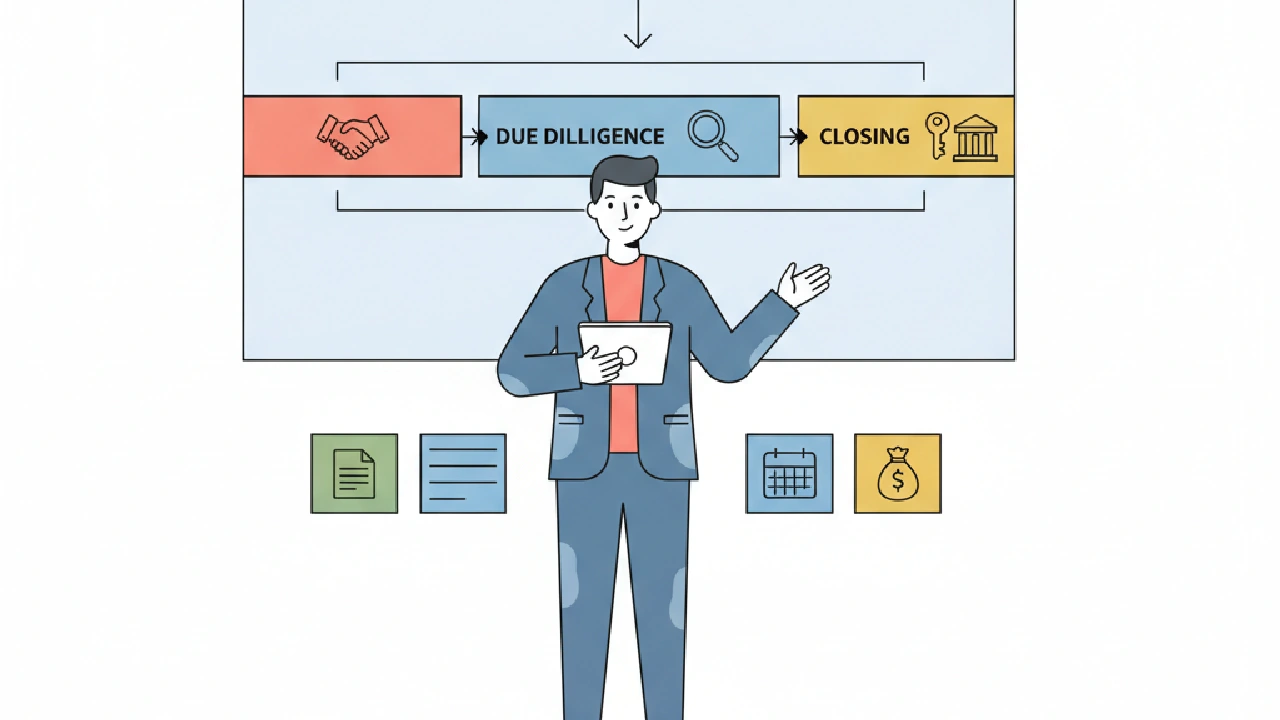
We've all been there: a stack of deals, some hot, some cold, all living in various spreadsheets, email threads, and maybe a few sticky notes. It's a mess, and it costs us money. Imagine losing out on a $5 million deal because you missed a critical follow-up during due diligence, or you couldn't quickly tell if a deal was stalled or truly dead. That's not just an oversight; it's a direct hit to your bottom line. What we're talking about today is getting a handle on that chaos with solid CRE pipeline management.
A proper CRE pipeline isn't just a list of deals. It's a structured way to track every opportunity from that first sniff to the closing table. It means knowing where every deal stands, who owns it, and what the next move is. We're talking about a stage-gated process, not some generic sales funnel. This isn't about making things pretty; it's about making them clear, efficient, and profitable.
Define Your Stages, and Stick To 'Em
The first mistake many of us make is not having clearly defined stages for our deals. We lump everything into "active" or "in progress," and that's a recipe for confusion. Every deal needs to move through distinct, non-overlapping stages. Think of it like this: if you can't tell exactly what needs to happen to move a deal from "sourcing" to "initial underwriting," your stages are too vague.
For acquisitions or debt origination, common stages might look like this:
- Sourcing / Screening: This is where deals first hit your radar. You're just evaluating if it's even worth a deeper look. This could involve automated alerts from listing services, broker emails, or even cold outreach. The goal here is broad reach and quick elimination of non-starters.
- Initial Underwriting: You're digging into the numbers, running basic comps, and seeing if the deal fits your investment criteria. This stage involves preliminary financial modeling, risk assessment, and a deeper dive into market dynamics. Here, you're asking: "Does this deal have the potential to meet our return hurdles?"
- LOI / IC Prep / Diligence: You've got an LOI out or you're preparing an Investment Committee memo. Due diligence is kicking into high gear here. This is a critical stage where significant resources are often expended. It involves legal review, environmental assessments, detailed financial analysis, tenant interviews, and often site visits. The IC memo needs to encapsulate all key findings, risks, and opportunities for executive review.
- Financing / Approvals: You're securing financing, getting internal approvals, and making sure all the ducks are in a row before contract. This stage often runs in parallel with late-stage due diligence. It involves discussions with lenders, negotiating term sheets, and finalizing internal investment committee approvals based on the complete due diligence findings.
- Close / Handoff: The deal is under contract, and you're driving it to the finish line, then handing it off to asset management or operations. This final stage is about execution – managing the closing process, coordinating with legal teams, and ensuring a smooth transition for the asset into the portfolio.
Each stage needs crystal-clear entry and exit criteria. What absolutely has to happen for a deal to move from “sourcing” to “initial underwriting”? No ambiguity. This stops deals from languishing in a stage for weeks with no clear path forward. For example, to move from “Sourcing” to “Initial Underwriting,” a deal might require a preliminary financial screen passing a certain hurdle rate and confirmation that it aligns with geographic and asset class targets. To exit “Initial Underwriting” and enter “LOI/IC Prep,” a complete preliminary valuation model and a brief internal memo outlining key risks and opportunities might be required. Without these explicit gates, deals can easily get stuck or fall through the cracks, consuming valuable time and resources.
For development, you'd have different gates: site control, entitlement, design, financing, construction, lease-up, and stabilization. Again, clear criteria for moving between each. Weekly reviews for slippage against critical-path dates are non-negotiable here. For instance, moving from "Site Control" to "Entitlement" might require executed purchase agreements or options and initial environmental assessments. Moving from "Construction" to "Lease-up" would require a certificate of occupancy. A detailed Gantt chart with dependencies and responsible parties for each stage is crucial for development projects due to their inherent complexity and longer timelines.
Before You Define Your Stages, Check This:
- Are your stage definitions unambiguous? This means avoiding terms like "reviewing" or "considering" and instead using action-oriented descriptions.
- Does each stage have clear entry and exit criteria? These criteria should be measurable and objective, preventing subjective advancements.
- Can every team member explain what each stage means? Consistency across the team is vital for effective pipeline management and communication.
- Have you accounted for deals that might loop back or restart? Sometimes a deal might need to go back a stage (e.g., re-negotiating an LOI) or even be re-evaluated from an earlier stage if market conditions or deal terms change significantly. Your system should allow for this flexibility without losing historical context.
Structured Data Beats Gut Feelings
We all pride ourselves on our intuition, but even the best gut feeling needs data to back it up. A strong CRE pipeline system isn't just about showing status; it should be capturing structured deal data. We're talking submarket, property type, asking cap rate, valuation, decision points, and crucially, rejection reasons. If a deal doesn't move forward, why not? Was it price? Condition? Submarket? Knowing this builds a valuable database.
Think about it: how can you refine your acquisition strategy if you don't know why your last five deals fell through? This data allows you to query your pipeline, not just treat it as a glorified to-do list. For example, if you consistently find deals in a certain submarket are overpriced, that's actionable intelligence. You can adjust your sourcing efforts. Or if multiple deals are failing due to environmental concerns, it might indicate a need to revise your initial screening criteria or engage specialists earlier in the process. Without structured data, you're just guessing.
Example: The Underwriting Handoff
Model Your Deals, Don't Just Track Them
Beyond simply tracking stages, a robust CRE pipeline demands you model the financial aspects of each deal directly within your system. This isn't just about having a number; it's about understanding the assumptions behind that number and how they impact your overall strategy. Moving from static spreadsheets to dynamic, integrated modeling ensures that your underwriting is always tied to the deal's current status.
For acquisition deals, this means being able to quickly calculate and compare key metrics like Net Operating Income (NOI), cap rate, Debt Service Coverage Ratio (DSCR), and Internal Rate of Return (IRR) under various scenarios. If a seller drops their price by 5%, what does that do to your projected IRR? Or if interest rates tick up, how does it affect your DSCR? Having these calculations live within the deal record, rather than in a separate, easily outdated spreadsheet, means you always have an up-to-the-minute understanding of a deal's financial viability. This capability lets you quickly adapt to changing market conditions or renegotiation points.
For example, in a $10 million acquisition, a slight change in projected vacancy or operating expenses can significantly impact your NOI and, consequently, your cap rate and cash-on-cash return. If you're working with a system that includes an underwriting module in CREflow, you can adjust these assumptions directly within the deal's financial model and immediately see the ripple effect on your key metrics. This ensures that your underwriting is always aligned with the latest information and empowers you to make data-driven decisions swiftly.
Centralize Communication and Documents
Deals live and die by communication. Scattered emails, lost documents, and forgotten conversations are deal-killers. Your pipeline management system should be the central hub for all deal-related communication and documentation. This means not just tracking activities, but making sure every team member has access to the latest comments, notes, and uploaded files for every single deal.
Imagine a scenario where your associate is out sick, and you need to respond to a critical due diligence request. If all the prior communication and relevant documents are siloed in their email or local drive, you're dead in the water. A centralized system, where every deal comment and document is linked directly to the deal in CREflow, allows any authorized team member to pick up where another left off. This reduces critical dependencies on individuals and creates a resilient workflow. This also extends to formal offers and LOIs; keeping a clear, chronological record within the deal's Offers tab in CREflow eliminates confusion during intense negotiations.
Key takeaways
- Define clear, unambiguous stages with specific entry and exit criteria to ensure deals progress efficiently and prevent them from getting stuck.
- Implement structured data capture for every deal, recording details like submarket, property type, and especially rejection reasons, to build a valuable database for refining your acquisition strategy.
- Integrate financial modeling (NOI, cap rate, IRR) directly into your deal tracking to dynamically assess viability and adapt to changing assumptions or market conditions.
- Centralize all deal-related communication and documentation, including comments, files, and offers, to ensure team-wide access and reduce reliance on individual knowledge or scattered information.
- Leverage automated actions, such as task creation based on deal stage changes, to standardize workflows and ensure critical follow-ups are never missed.
FAQ
How can I ensure my team consistently uses the defined deal stages?
Start by clearly communicating the purpose and criteria for each stage to your entire team. Regular training and consistent reinforcement during deal review meetings can help. Using a platform that visually represents the pipeline, like a Kanban board, and allows for deal stage triggers in CREflow that automate tasks, can also encourage adherence by making the process intuitive and beneficial.
What kind of structured data is most important to capture for long-term analysis?
Beyond basic property and financial details, prioritize capturing rejection reasons, source of the deal, key market indicators (e.g., submarket vacancy rates), and any specific due diligence findings that significantly impacted the deal. This data allows for powerful post-mortems and strategic adjustments to your sourcing and underwriting criteria.
How can I avoid deals getting "lost" or stalling in my pipeline?
Implement clear accountability by assigning a deal owner for each opportunity. Utilize automated reminders and follow-up tasks tied to deal stages. Regular pipeline review meetings to discuss stalled deals and assign next steps are crucial. Features like the Action Center in CREflow can provide a prioritized list of tasks, helping ensure nothing falls through the cracks.
Is it better to use a general CRM or a specialized CRE pipeline management tool?
While general CRMs can be adapted, specialized CRE pipeline management tools are often superior because they are built with the unique workflows, terminology, and financial modeling needs of commercial real estate in mind. They offer features like integrated underwriting modules, property-specific data fields, and deal-centric activity tracking that general CRMs lack. For example, CREflow is designed specifically for boutique CRE acquisition teams, offering tailored features that directly address industry-specific challenges.
What if my team has different types of deals, like acquisitions and dispositions?
A flexible system should accommodate different deal types without forcing them into a single, generic pipeline. Look for tools that allow for per-pipeline deal pages in CREflow or customizable pipelines for acquisitions, dispositions, and even broker-mode deals like tenant or landlord representation. This ensures each deal type is managed with its specific stages and data requirements.