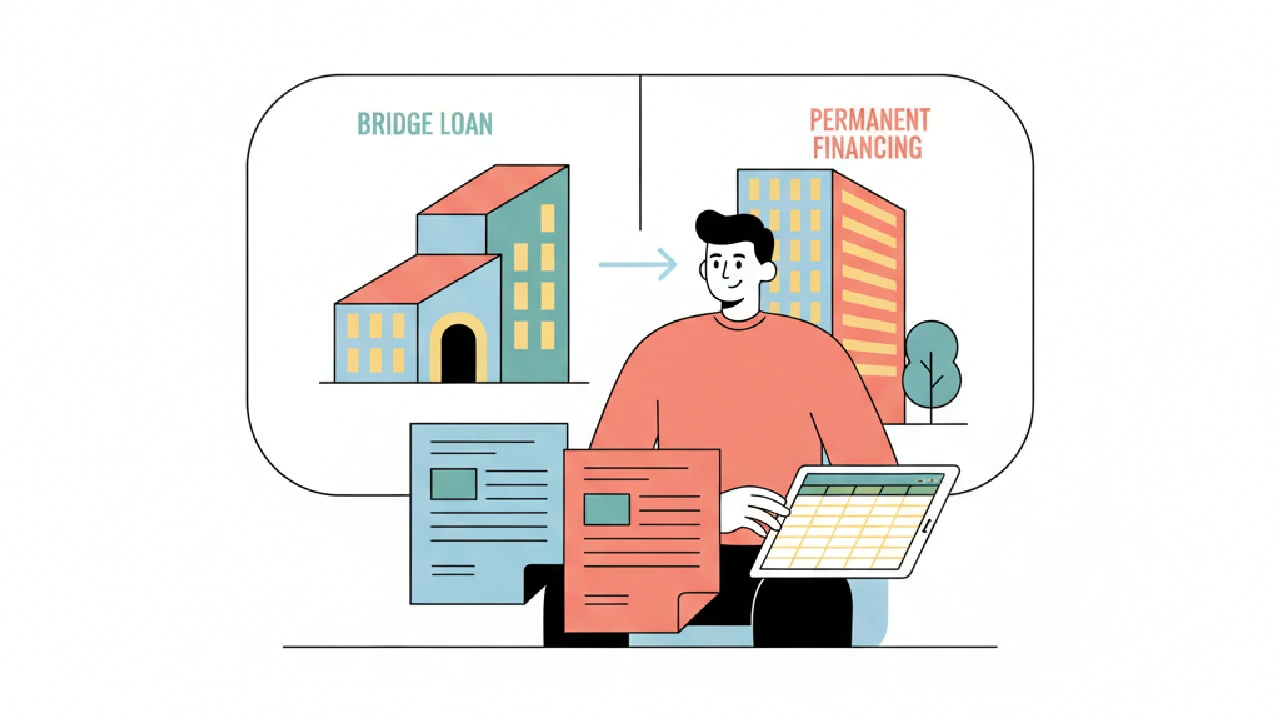
You have a mid-market deal in the 2–10M range and the seller wants a fast close. Your operating partner is out for two weeks and time is money. A commercial bridge loan gets you to close quickly, but it costs more and forces decisions fast. Permanent financing costs less over time and gives certainty, but it takes longer and can kill a purchase if you wait too long. This piece lays out exactly when to pick one, how to structure the bridge-to-perm path, and what to watch for when you sign papers.
Core idea, simply
A practical guide to bridge loans: short-term capital designed to "bridge" you to a later outcome — sale, rehab stabilization, or permanent financing. By design it’s faster and looser on underwriting. Permanent financing is about cost and runway: lower long-term expense, longer term, more covenants and stricter underwriting. Pick a commercial bridge loan when speed or flexibility creates value you otherwise can’t capture; choose permanent when certainty and lower ongoing cost matter more than closing speed.
1) When to use a bridge — play the option
Use a bridge when speed or a temporary condition is the differentiator. Common scenarios: the seller will only wait a few weeks, you need to buy while doing light rehab, or you’re refinancing to stabilize for a later agency or life company loan. Bridges underwrite for short duration and more creative collateral or sponsorship situations. Typical length is short — often 6 to 24 months — so the lender assumes you have a clear exit.
What a bridge gives you that permanent won’t:
- Speed: approvals and funding move faster because lenders accept more execution risk up front.
- Flexibility: lenders will price or structure around workplans, lease-up assumptions, or sponsorship gaps.
- Leverage on messy deals: if the property doesn’t fit standard agency or bank boxes, a bridge can close it.
Don’t use a bridge to paper over a weak underwriting case. If your exit plan is vague or market-dependent, a bridge just adds refinancing pressure. For a concise primer on when different loan types fit particular situations, see when each loan type fits.
2) When to take permanent financing — control the carry
Permanent financing wins when holding costs matter. If you expect stable cash flow and plan to hold, lower interest, longer amortization, and tighter covenants reduce the total cost of ownership. Permanent loans also limit refinancing risk — you don’t have to solve an exit within months. That matters if the market is soft or if your business plan depends on steady rental income rather than a quick sale or stabilization.
Choose permanent when:
- Your underwriting shows hold returns exceed the transaction friction for a long-term loan.
- You can meet strict underwriting: occupancy, rent comps, sponsor track record, and documentation.
- You prefer a predictable debt service and fewer surprises from short-term lender pushes.
3) How to structure bridge-to-perm without tripping the alarms
If you plan to bridge to a permanent loan, make that path explicit and executable from day one. Lenders and partners care about the exit as much as you do. That means:
- Set a realistic timeline that matches the bridge term. Bridges are short; plan the permanent package and appraisal timeline accordingly.
- Keep the permanent lender in the loop early. If you wait until close to apply, you’ll lose time and negotiating leverage.
- Control covenants that can block the permanent path: avoid unusual recourse events or structural liens during the bridge term.
Refer to our commercial real estate underwriting guide for preparing a permanent package and anticipating lender questions. Common traps: taking a bridge with a prepayment penalty that kills your refinance window, or doing work that increases basis so the permanent lender balks at LTV. Manage those up front.
4) Execution: diligence, docs, and lender selection
Execution wins deals. On mid-market deals the spread between success and failure is often in the diligence speed and contract mechanics.
Practical playbook:
- Prioritize lenders who close on documentation you already have. Time is the edge; a lender who asks for fewer custom reports wins.
- Ask about comps and appraisal turnaround before you accept a term sheet. A slow appraisal can blow your bridge timeline.
- Get clarity on interim interest accrual, reserves, and funding draws. Those line items kill returns if you don’t model them.
- Watch for aggressive default triggers. Short-term lenders sometimes tighten covenants mid-term; negotiate cure periods and notice language.
Deals have failed because teams undervalued legal review time on pledge and subordination language. Don’t. That’s cheap insurance compared to losing a closing. Consider dedicated tools for managing due diligence to keep approvals and docs moving.
5) Mini-case: the hold-or-flip crossroads
Imagine a mid-market building that needs some leasing work and a few capital repairs. Your plan is to buy, lease up, and either sell or refinance to permanent once stabilized. You can’t wait months to close; the seller will move on. A commercial bridge loan gets you closed quickly and lets you start the leasing. During the bridge term you execute the leasing plan and improve performance enough to qualify for permanent financing.
How you think through it in practice:
- Be explicit about the exit: Is it sale at stabilization or refinance? Pick one and model both outcomes.
- Lay out the timing: if the bridge term is within that common 6–24 month window, check that your leasing and permits realistically fit that schedule.
- Select a bridge lender who will accept your exit strategy; some will only underwrite to sale, others to refinance.
If anything in that plan looks optimistic, don’t bridge. Either stretch your capital plan to close with permanent financing or walk away.
Comparison: Spreadsheet vs Platform for Managing Bridge-to-Perm
If you’re debating tools, our guide on when to switch from spreadsheets to deal management software will help.
| Dimension | Manual Spreadsheet | Centralized Platform |
|---|---|---|
| Visibility | Owner must update; easy to miss changes | Single source of truth for team with live updates |
| Handoffs | Email and folders; high friction | Built workflows reduce back-and-forth |
| Audit trail | Versioned files are messy | Full audit history of approvals and docs |
| Speed | Faster to start, slower as complexity grows | Faster at scale and reduces closing friction |
| Team use | Best for solo or tiny teams | Better for operators with brokers, lenders, and asset managers |
Feature note: to keep bridge-to-perm timelines honest, use CREflow features that map to these exact pain points: open the Action Center to prioritize due and overdue follow-ups across properties and calendar items; use Actions → Schedule Follow-up on a Property to create reminders that appear on the Calendar and in the Property Activities panel; and prepare your permanent package in the deal Underwriting tab so appraisal and metric gaps are visible early.
Key takeaways
- Use a commercial bridge loan when speed or a temporary window creates value you can execute within 6–24 months.
- Choose permanent financing when holding costs and certainty matter more than a fast close.
- If you plan bridge-to-perm, document the exit path early and align lender requirements before you close.
- Execution details — appraisals, covenants, prepayment language — determine whether the plan works. Read the docs.
FAQ
How long is a commercial bridge loan?
Typically short — many bridges run in the 6 to 24 months range. They’re built to bridge immediate needs, not to be long-term debt.
Can I refinance a bridge into permanent financing?
Yes — that’s a common path. But you must plan the timeline, meet the permanent lender’s underwriting, and avoid bridge terms that block refinance (like heavy prepayment penalties). Using the deal Underwriting tab earlier in the process helps you see metric gaps (NOI, DSCR, cap rate) before you commit.
Is a bridge always more expensive?
Generally yes on a per-month or per-year basis. Bridges price higher because they’re short-term and riskier to lenders. But that cost can be justified if speed or optionality creates value.
What are common deal-breakers on bridge loans?
Unrealistic exit plans, aggressive default triggers, long appraisal turnarounds, and reserves or funding mechanics that owners underestimated. Don’t assume the lender will be flexible mid-term. Use the Property Activities panel and Log Touch records to keep a clean audit trail of owner/broker outreach and commitments.
Before You Choose Financing For This, Check This:
- Do you have a clear exit: sale, stabilization, or refinance? Write it down and stress-test it.
- Can the timeline reasonably fit a bridge term (remember typical bridges are 6–24 months)?
- Have you modeled interim costs: interest accrual, reserves, draws, and potential prepayment penalties?
- Have you asked both bridge and permanent lenders what would kill the refinance or sale at exit?
- Do your legal docs limit unexpected liens or obligations during the bridge term?
If you run the checklist and the bridge still wins, close quickly, control the execution, and get the permanent package in motion on day one. When you want to compare workflows and track your acquisitions pipeline in CREflow, use the platform features above to keep follow-ups and underwriting visible to your team.