You’ve just sourced a killer lead. A property owner, sitting on a prime asset, ready to talk. You get them on the phone, have a great chat, and promise to follow up with some market comps. Then the next day, you’re chasing a hot listing, fielding offers, or putting out a fire on a deal that’s about to blow up. Suddenly, that follow-up you promised? It slips. Not because you’re bad, but because your system for tracking touches with dozens, maybe hundreds, of owners isn’t airtight. That's a deal-killer.
It happens to the best of us. But the best of us learned quick how to fix it. This isn't about some fancy CRM that does the work for you; it's about disciplined process and the right tools to keep your pipeline moving. We’re talking about tracking every interaction, every promise, and every next step with every owner in your database. Without this, you're leaving money on the table, plain and simple.
The Cost of "Wing It" Tracking
Think about it. You’ve got a hundred owners you’re nurturing. Maybe ten are active prospects, twenty are warm, and the rest are long-term plays. If you’re just relying on memory or scattered notes, you’re already behind. A missed call, a forgotten email, or a delayed follow-up can cool off a hot lead faster than you can say "LOI." I’ve seen brokers lose out on millions in commissions because they couldn’t keep their outreach straight. It’s not about how many owners you can contact, it’s about how many you can effectively manage and move through your CRE pipeline.
Your reputation takes a hit too. Owners remember when you drop the ball. In CRE, trust is everything. If you can’t manage a simple follow-up, how can they trust you with their multi-million dollar asset? You need a system that ensures nothing ever gets missed. Every touchpoint logged, every next step clear, and every task accounted for. That’s how you build a consistent deal flow.
Your CRM Is Your Command Center (Not Just a Rolodex)
Too many brokers use their CRM like an address book. Big mistake. Your CRM, whether it’s a dedicated CRE platform or a custom setup, should be your daily battle plan. It’s where you log every call, every email, every meeting. But more importantly, it’s where you define your next steps.
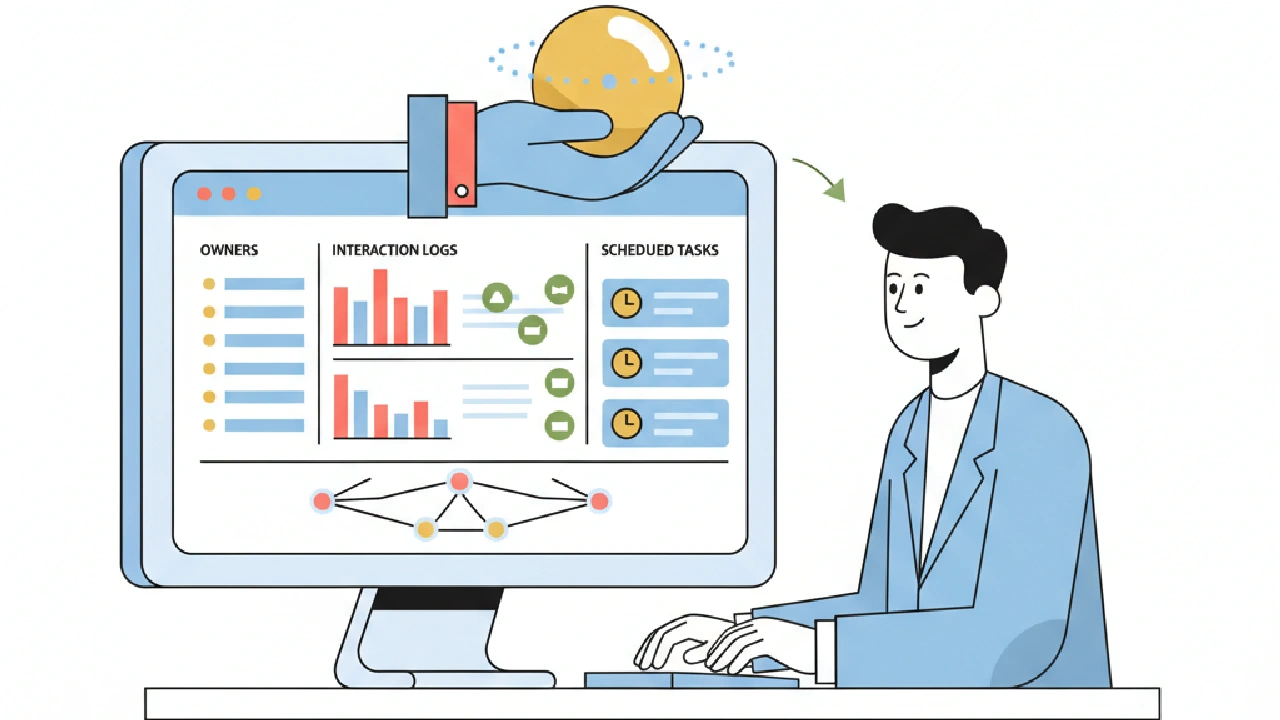
When you hang up with an owner, don’t just close the record. Immediately schedule the next action. Is it a follow-up call in two weeks? An email with new comps next Tuesday? A reminder to check in on their market sentiment in a month? Put it in the CRM with a specific date. Make it a task, not just a note. This is how you create what we call "follow-up visibility" – you can see your last interaction, and more importantly, your next planned one, all in one glance. This is crucial for avoiding those "oops, I forgot" moments. For example, in CREflow, you can use Actions → Schedule Follow-up on any property to set a reminder that appears on your Calendar and in Action Center. When you complete an activity, a Log Touch form opens automatically, ensuring your property history stays accurate.
Before You Forget This, Check This:
- Is every owner contact in your CRM?
- Are you logging every interaction immediately after it happens?
- Is there always a clear "next step" scheduled for every active owner?
- Are you using task reminders for all follow-ups?
Segment Your Owners, Streamline Your Touches
Not all owners are created equal, and your touch strategy shouldn’t be either. You can’t treat a hot prospect who’s ready to sell the same way you treat a long-term hold who just wants market updates once a quarter. This is where segmentation comes in. We categorize owners:
- A-Listers: Hot leads, active listings, current deals. These get daily/weekly touches.
- B-Players: Warm prospects, owners considering selling in 6-12 months. Monthly touches.
- C-List: Long-term holds, past clients, general market intelligence. Quarterly or bi-annual touches.
This isn't just about frequency; it's about relevance. Sending a market update to someone actively negotiating a deal is noise. Sending a tailored investment opportunity to a C-list owner might be exactly what sparks their interest. Your system should allow you to tag and filter owners easily, so you can apply the right touch strategy to the right group. This helps avoid wasted effort and ensures your communication hits home.
Automate Where You Can, Personalize Where It Matters
Automation gets a bad rap in CRE, but it’s not about replacing personal touches. It’s about ensuring the foundational, repetitive tasks are handled so you can focus on the high-value, personal interactions. For instance, you can set up automated reminders for routine market updates to your C-list owners. This keeps you top-of-mind without manual effort for every single contact.
Where automation truly shines is in prompting your next steps. Instead of relying on memory, a good system will tell you when it’s time to call that B-player, or to send the comps to your A-lister. This "intelligent prompting" ensures consistency and prevents leads from going cold.
The Power of the Property Activities Panel
Beyond just logging individual touches, having a holistic view of all activities related to a property is key. Imagine seeing all past calls, scheduled meetings, tours, and follow-ups for a specific property in one place. This complete history helps you pick up exactly where you left off, even if weeks have passed or a teammate is covering for you.
Where a CRE-specific tool helps
To truly never drop the ball, a system needs to unify your communication history and upcoming tasks. CREflow helps boutique CRE acquisition teams manage follow-up discipline with features like its Action Center for prioritized tasks, a comprehensive property contact history, in-app notifications, and deal-stage automation. These tools ensure missed next steps and cold leads become a thing of the past. Track your acquisitions pipeline in CREflow.
Key takeaways
- Implement a robust CRM strategy: Treat your CRM as your command center, not just an address book. Log every interaction and immediately schedule the next step.
- Segment your owner database: Tailor your touch frequency and content based on owner urgency and readiness (A-Listers, B-Players, C-List).
- Leverage automation for consistency: Use automated reminders for routine follow-ups and ensure your system prompts your next high-value actions.
- Maintain a holistic activity view: Ensure all property-related activities are visible in one place for complete historical context and seamless handoffs.
- Discipline is paramount: No tool, however sophisticated, can replace consistent adherence to your chosen process.
By integrating these principles into your daily workflow, you’ll not only improve your follow-up game but also build stronger, more trusting relationships with property owners, ultimately leading to more deals and a healthier pipeline.
Leveraging Property-Centric Views
A property isn't just an address; it's a hub of activity. Beyond individual touches, understanding the full history of a property’s engagement is vital. The Property Activities panel, for example, consolidates all tasks, calls, meetings, tours, and follow-ups scheduled on a property. This includes past-due items, ensuring you have a complete picture of everything that’s open on that asset, fostering stronger follow-up discipline. Similarly, the Lifecycle Information section offers a quick overview of a property's status as it moves through deals and campaigns, helping you track its journey from lead to deal with automatic updates.
FAQ
How does CREflow help with owner segmentation?
While CREflow doesn't automatically segment owners into "A-Listers" or "B-Players," its robust tagging features on properties and contacts allow you to create custom labels to categorize your relationships. You can then use these tags to filter lists and tailor your outreach strategies, ensuring personalized communication for different owner groups.
Can I track financial metrics for a property within CREflow?
Yes, for acquisition deals, CREflow includes an Underwriting tab where you can model NOI, cap rate, cash flow, and IRR. This allows you to run acquisition math inside the platform, keeping your financial analysis connected to your deal records without needing separate spreadsheets.
What happens if I miss a scheduled follow-up?
Missed follow-ups or overdue tasks will appear prominently in your Action Center and on the Property Activities panel. This centralized view helps ensure no critical next steps are overlooked, providing a prioritized list of what's due today, overdue, and going cold.
How can I ensure my team is collaborating effectively on owner outreach?
CREflow facilitates team collaboration through features like the Team Activity Feed on the dashboard, which shows recent actions from all team members. Deal comments support @mentions, notifying the right person when their input is needed. This ensures consistent communication and shared visibility across your team.