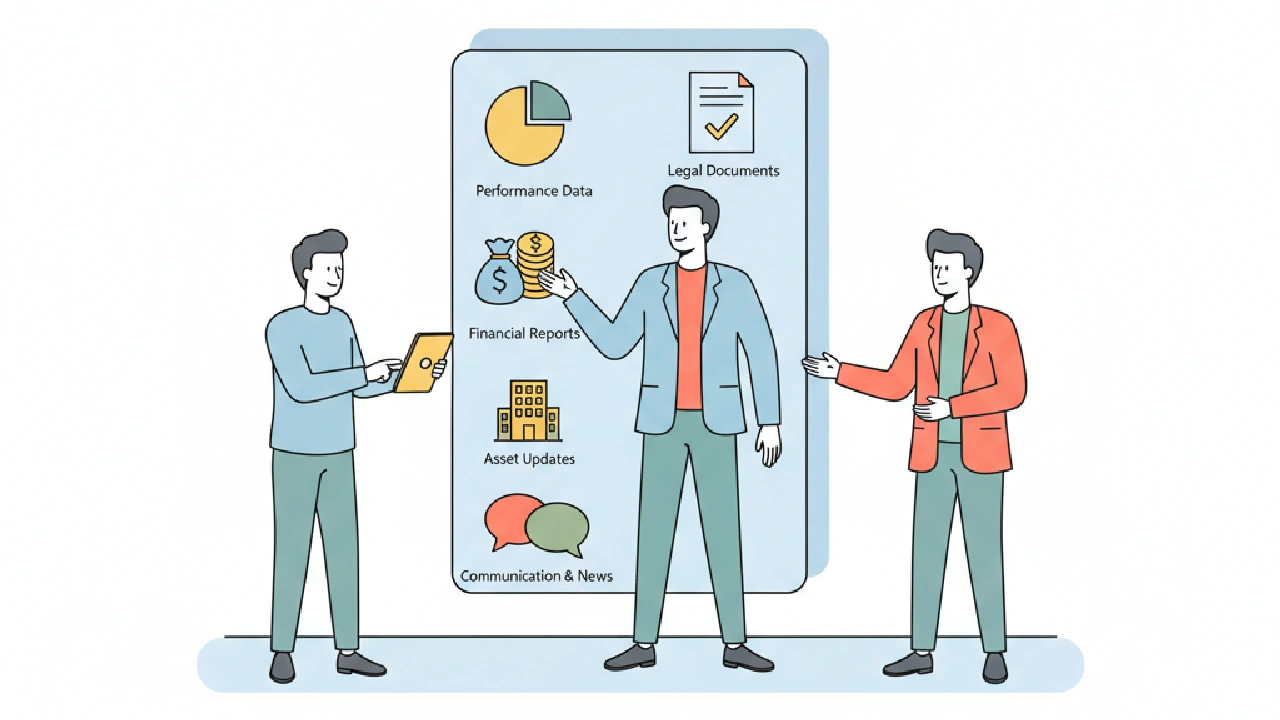
A CRE LP portal should hold the documents, numbers and notices each limited partner needs to follow their investment without emailing the sponsor: their signed offering and closing documents, their capital account, regular property reports, distribution notices, tax forms such as Schedule K-1, and any new deal packages you invite them to review. For a small sponsor, the portal can be as simple as an organized, access controlled shared folder per deal, as long as each investor sees what is theirs and nothing that belongs to another investor. This guide is general education, not legal, securities or tax advice. Have a qualified securities attorney and your own advisors review what you share with investors and how you share it.
What is a CRE LP portal?
A CRE LP portal is a single, access controlled place where a sponsor shares deal documents, reports, distributions and tax forms with the limited partners in a commercial real estate deal.
It is the investor facing side of your records. It is not the same as the way you file documents internally, and it is not the investor relationship itself. For cadence and relationship habits, see the CRE investor relationship management playbook. For the letter you send each quarter, see how to build an investor update email that actually gets read.
What should a CRE LP portal include?
At minimum, a portal should cover offering documents, each investor's capital account, periodic reports, distributions and tax documents.
| Section | What goes in it | Shared with | When it changes |
|---|---|---|---|
| Offering and closing documents | Final offering materials, operating or partnership agreement, the investor's own signed subscription documents | All LPs (agreement); each LP only (their signed copies) | At closing and after any amendment |
| Capital account | Commitment, capital contributed, distributions received, any capital calls | Each LP only | After every contribution or distribution |
| Property reports | Investor update letters, operating summary, occupancy and leasing notes, budget vs actual, capex progress | All LPs in the deal | On the cadence your documents promise |
| Distribution notices | Amount, date and basis for each distribution | Each LP only | Each distribution |
| Tax documents | Schedule K-1 and any related statements | Each LP only | Each tax year |
| Major event notices | Refinance, sale, loan modification, material lease or capital events | All LPs in the deal | As events happen |
| New deal packages | Deal summary, underwriting, pro forma and offering memorandum for an upcoming deal | Only investors you invite to review it | Per new deal |
| Contacts and procedures | Who to contact, how to update banking or address details, how payment instructions are confirmed | All LPs | When people or procedures change |
Keep the structure the same for every deal. An investor in two of your deals should find the K-1 in the same place both times.
What do LPs expect to access?
LPs mainly expect three things: proof of what they own, how the property is performing, and their own money in and out.
- What they own: the signed agreement and their subscription documents, so they never have to ask you for a copy.
- How the deal is doing: the reports you promised, in the format you promised, posted when you said they would be.
- Their money: a current view of what they contributed and what they have received, plus each distribution notice.
- Tax forms on time: a partnership generally must file Form 1065 by the 15th day of the third month after its tax year ends (March 15 for a calendar year, subject to extensions) and furnish a copy of Schedule K-1 to each partner, per the IRS Instructions for Form 1065. Posting each K-1 in the investor's own folder is the natural place for it.
If you are raising for the next deal, the same investors will judge you on how organized the last one was. See how to raise capital for commercial real estate and how to track investor soft commits.
Who should get access to what?
Give every investor access to the deal level documents and reports, and keep anything with one investor's name, money or tax data visible only to that investor and the sponsor team.
| Access level | Examples |
|---|---|
| All LPs in the deal | Operating or partnership agreement, investor updates, property reports, major event notices |
| One LP only | Signed subscription documents, capital account, distribution notices, Schedule K-1, any investor specific side letter |
| Invited investors only | New deal packages before you open an offering to them |
| Sponsor team only | Internal underwriting drafts, lender and broker correspondence, investor onboarding records, notes on investor conversations |
Who may invest in a private offering at all depends on securities rules such as the accredited investor definition. The SEC's investor education site explains it in its accredited investors bulletin. Your counsel should decide which investors can see offering materials and when.
How do small sponsors share reports and deal packages without a fund admin platform?
Most small sponsors start with one shared folder per deal, a subfolder per investor, and a regular update email that links to the new files.
- Create one top folder per deal with fixed subfolders: Agreement, Reports, Notices, Investors.
- Give each investor a private subfolder for their signed documents, capital account, distribution notices and K-1s.
- Name files the same way every time, for example deal name, document type and period, so investors can find a report by date.
- Post first, then email. Your update email should link to the report in the portal instead of attaching a new copy each time.
- Review access every time an investor joins, transfers or exits, and remove access that is no longer needed.
- Confirm payment instructions by phone with a known number before any wire, and tell investors you will never change wiring details by email alone.
As the investor list grows, dedicated investor portal or fund administration software can take over capital accounts, distributions and tax document delivery. Until then, consistency matters more than the tool. For how equity is split and reported in a joint venture, see JV equity structure, and for the yearly investor rhythm, see the CRE investor annual plan.
What should you leave out of an LP portal?
Leave out anything that exposes another investor's data, anything your counsel has not approved for investors, and internal working files.
- Other investors' names, amounts, contact or tax details in a shared folder.
- Draft projections or marketing for a new deal that has not been reviewed for an offering.
- Internal underwriting drafts, broker and lender negotiations, and team notes.
- Full bank account numbers or wiring details posted as plain documents.
When in doubt, ask whether you would be comfortable if every investor in the deal opened the file. If not, it belongs in an investor's private folder or stays internal.
Where CREflow Pro fits
CREflow Pro is deal flow software for small acquisition teams. It is not an LP portal, fund administration or tax document tool. It helps on the deal side that feeds your investor reporting: each deal keeps its contacts, documents, due diligence checklist and underwriting (NOI, cap rate, DSCR and IRR) in one record, and you can share underwriting, pro forma projections, deal summaries and due diligence checklists by link when investors or partners need to review a new deal. To build a package now, run the numbers in the free underwriting calculator, project the hold with the free pro forma generator, or pull an offering memorandum into a deal with the free OM import. When your team is ready to run every deal in one place, see CREflow Pro pricing.
Frequently asked questions
What is the difference between an LP portal and an investor update email?
The portal is where documents and reports live. The update email is the message that tells investors something new is there and explains what changed. Link the email to the portal so there is one current version of each file.
Do small sponsors need investor portal software?
Not at the start. A well organized, access controlled shared folder per deal works for a small investor list. Software becomes worth it when capital accounts, distributions and tax documents take more time than you can keep accurate by hand.
Should every LP see the same documents?
Every LP in a deal should see the same agreement, reports and major notices. Each investor's signed documents, capital account, distributions and K-1 should be visible only to that investor and the sponsor team.
When should K-1s go into the portal?
As soon as they are final. The IRS requires a partnership to furnish a copy of Schedule K-1 to each partner, and Form 1065 is generally due by the 15th day of the third month after the tax year ends, subject to extensions. Tell investors when you expect them so they can plan their own filings.
Can I share a new deal's underwriting with past investors through the portal?
You can share a deal package with investors you invite, but whether and how you present an offering is a securities question. Have counsel confirm what you can share and with whom before you send it.
This article is general information, not legal, securities or tax advice. Have a qualified securities attorney and your own advisors review your investor documents, access settings and any offering materials before you share them with investors.