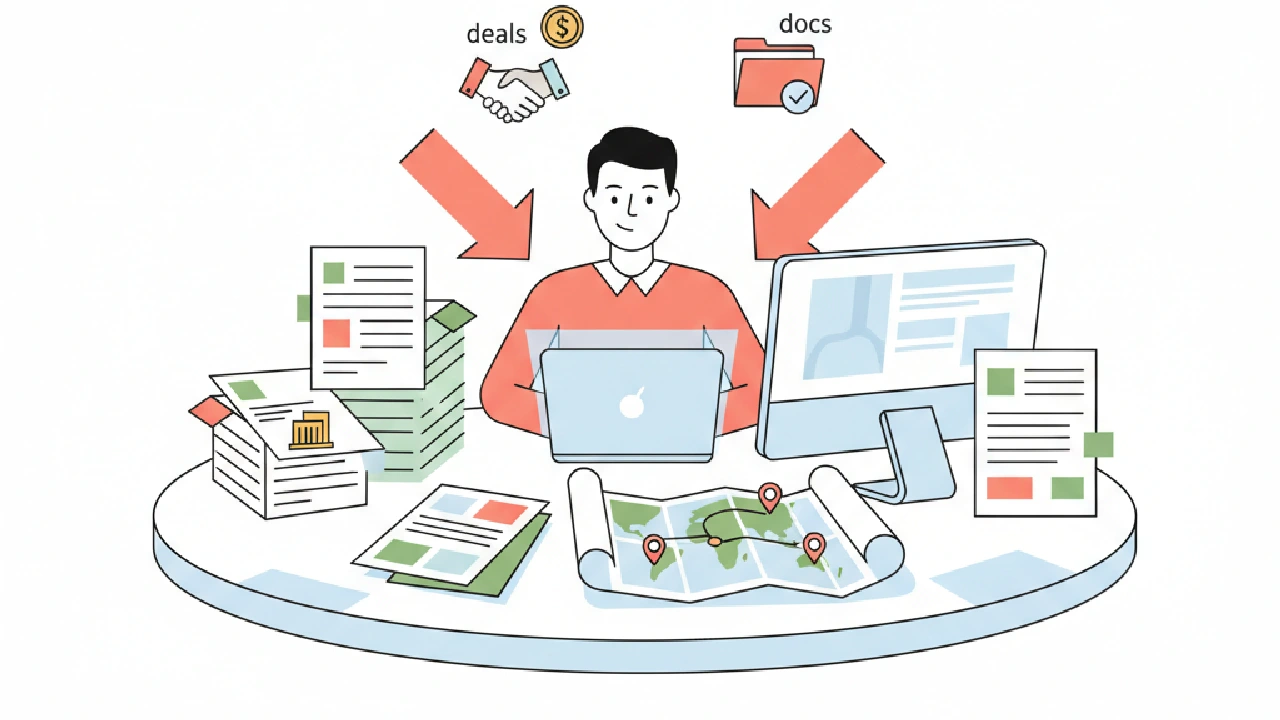
Let's be honest: in commercial real estate, you're leaving money on the table if your deal data, documents, and reminders are scattered. We've all been there—a hot lead goes cold because we missed a follow-up, or we're scrambling to find that critical LOI in a buried email chain. That's not how we make money.
For us, whether you're a solo operator or running a small team, the game is about disciplined execution. You need to keep every opportunity moving forward, from that first cold call to closing and disposition. That's where a tool like CREflow comes in. It's not just a CRM; it's a workflow platform built to keep your acquisitions humming, centralizing everything so you can focus on the deal, not the data hunt.
The Cost of Scattered Data: Missed Opportunities
Think about a typical week. You're sourcing new properties, analyzing potential deals, talking to brokers, and trying to keep tabs on existing assets. What happens when that owner you spoke to last month slips your mind? Or when the details of a promising off-market property are stuck in an old spreadsheet, separate from your contact notes?
It costs you. It costs you in wasted time, in redundant effort, and most critically, in missed deals. A warm lead that goes cold for lack of a timely follow-up is a lost opportunity. This isn't theoretical; it's real money. Using CREflow, we solve this by centralizing properties, contacts, and deal notes. When every interaction, every document, and every key detail lives in one place, you're always ready for the next step. No more frantic searches or relying on a half-remembered conversation. For solo investors, this centralization is especially critical to stop deals from slipping through the cracks.
Never Miss a Follow-Up Again: The Action Center
Follow-up discipline is non-negotiable. Whether it's chasing down an LOI, scheduling a site visit, or just touching base with a potential seller, those actions are what move deals forward. Without a solid system, things fall through the cracks. Your sticky notes and calendar reminders only go so far.
This is precisely why we rely on the Action Center in CREflow. It's not just a glorified to-do list; it's a prioritized queue of what you need to do today, what's overdue, and even what leads are going cold. You can see manual tasks and triggered follow-ups by pipeline. This means if you move a deal to "Under Contract," CREflow can automatically trigger tasks like "Order Title Search" or "Schedule Environmental." You don't have to remember to create those tasks—the system does it for you.
This approach gives you a unified view of your commitments. The system pulls in campaign follow-ups, property-specific tasks, and deal-stage reminders all into one spot. Instead of bouncing between your calendar, email, and a spreadsheet, you work from a single, prioritized list. That means fewer missed deadlines and more deals getting to the finish line. Learn how CREflow helped a small team slash missed follow-ups.
Before You Chase That Lead, Check This:
- Is the lead's contact history logged in CREflow?
- Are there any pending Action Center items for this contact or property?
- Is the property linked to the contact in CREflow for full context?
Underwriting with Confidence: Standardized Analysis
Underwriting needs to be fast and repeatable. We all have our preferred spreadsheets, but sharing them, updating them, and keeping versions straight can be a nightmare, especially when you're trying to collaborate or just quickly re-run numbers on a new assumption. Getting a rough sense of NOI, cap rate, and cash flow shouldn't take hours of manual data entry.
With CREflow, the underwriting module lives directly within the acquisition deal. You enter your assumptions—price, down payment, revenue, expenses, financing details—and the key metrics update automatically. No more linking cells across tabs or worrying about broken formulas. It standardizes your initial analysis. If you're tracking environmental issues or other due diligence notes, those stay on the linked property record, ready to be pulled into a shared deal summary. For a comprehensive guide, check out a practical guide to commercial real estate underwriting.
This built-in approach means you can quickly model different exit scenarios or refinancing options without recreating the wheel. When it's time to share with partners or investors, you can generate a read-only underwriting report directly from the system, branded and professional, without ever leaving the deal record. This keeps everyone on the same page and speeds up your decision-making process. Mastering due diligence becomes easier with CREflow as an investor's playbook.
Before You Analyze a New Deal, Check This:
- Is the property already in CREflow? If so, are all details (like environmental notes) up to date?
- Have you initialized the underwriting module in the acquisition deal?
- Are your revenue, expense, and financing assumptions clearly entered?
The Full Deal Story: Offers, Comps, and Checklists
A deal isn't just a number; it's a narrative. It's the initial offer, the counter-offers, the comparable sales that informed your pricing, and the mountain of tasks required to get to closing. If these pieces are fragmented—some in email, some in a folder, some in a text—you're constantly rebuilding the story. This creates risk, not to mention a serious headache when you're trying to remember why a specific term was accepted or rejected. Learn how to track LOIs and counter-offers without losing the thread.
CREflow brings these critical elements together on the deal record. The Offers tab tracks every offer, counter, and LOI, complete with statuses like "sent," "pending," "accepted," or "rejected." This means your negotiation history is always clear, attached directly to the deal it pertains to. No more guessing which version of the LOI was the final one.
Similarly, the Comps tab lets you add comparable sales directly to the deal. You can search your existing property database or enter new comps, providing immediate context for your pricing strategy. And the Checklist tab ensures you never miss a closing task. You can initialize a template, add custom items, and track progress, making sure that everything from title review to financing contingencies is handled methodically. These features mean the entire lifecycle of a deal, from initial valuation to closing tasks, is centralized and transparent. Check out your commercial real estate due diligence checklist for more details.
Before You Go Under Contract, Check This:
- Are all offers and LOIs logged in the deal's Offers tab?
- Are the comps supporting your price point added to the deal's Comps tab?
- Have you reviewed and initialized the closing Checklist tab for the deal?
Key takeaways
- Centralize property, contact, and deal data in CREflow to avoid missed opportunities.
- Leverage the Action Center for prioritized follow-ups and automated task creation.
- Utilize CREflow's built-in underwriting for fast, repeatable deal analysis.
- Keep offer history, comps, and closing checklists directly on the deal record.
FAQ
What does "centralizing deals" mean for commercial real estate investors?
Centralizing deals means keeping all information related to a specific commercial real estate opportunity—including property details, contact information, financial analysis, communications, and documents—in one accessible platform like CREflow. This eliminates scattered data across spreadsheets, emails, and notes, making it easier to track progress and make informed decisions.
How does CREflow help prevent missed follow-ups?
CREflow utilizes an Action Center and deal stage triggers. The Action Center provides a single, prioritized list of tasks due today, overdue items, and leads that are going cold. Additionally, when you move a deal through different stages, CREflow can automatically create specific follow-up tasks, ensuring critical steps are never forgotten.
Can I use CREflow for my initial deal analysis and underwriting?
Yes, CREflow includes a dedicated underwriting module within acquisition deals. This allows you to input financial assumptions directly into the platform, and key metrics like NOI, cap rate, and cash flow update automatically. This helps standardize your initial analysis and streamlines the process of evaluating potential investments.
What happens to my deal documents and offers in CREflow?
CREflow allows you to keep all your deal documents, offers, and comparable sales directly on the deal record. The Offers tab tracks every offer and LOI, preserving your negotiation history. The Comps tab lets you add supporting comparable sales, and the Checklist tab helps manage all closing tasks. This keeps the full deal story organized and accessible.
Is CREflow only for large investment firms, or can solo investors use it?
CREflow is designed for both solo commercial real estate investors and small teams. Its features, such as centralized property/contact management, campaign support, and automated lifecycle statuses, are specifically built to help individual operators and small teams efficiently source, underwrite, and manage their acquisition and disposition pipelines.