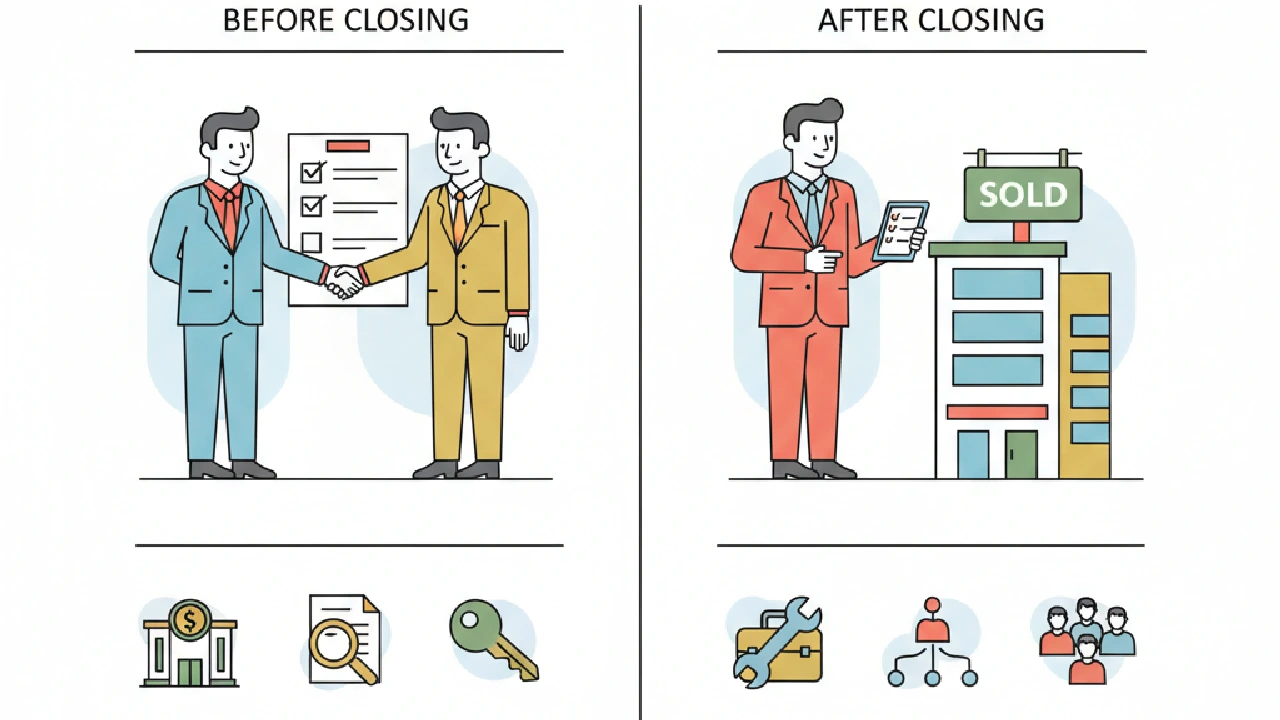
A commercial real estate closing checklist for buyers covers five areas: contract contingencies, financing, title and legal documents, tenant and property items, and the money side of closing day (insurance, the settlement statement and wires). Start working it the day due diligence ends, give every item an owner and a date, and confirm each one with your attorney, lender and title or escrow company before closing day.
Closings rarely fall apart over one big issue at the last minute. They slip on small items nobody owned: an estoppel that never came back, a proration nobody checked, a lender condition that showed up late. This checklist walks through what small acquisition teams and individual investors need to finish before and after closing.
This is general information, not legal or tax advice. Your purchase and sale agreement (PSA), your attorney and your lender set the actual requirements for your deal.
1. Clear contract contingencies and lock in your financing
As closing approaches, your main job is removing every open condition in the contract while keeping your lender moving. Do not assume the lender is working at your pace. Lender closing conditions often arrive late in the process, so ask for the full list early.
- Contingency sign-offs: Confirm that inspection, environmental and title review contingencies were waived or satisfied in writing, the way your PSA requires. This picks up where your commercial real estate due diligence checklist left off.
- Extensions and amendments: Put any change to dates or terms in a signed amendment. An email agreement is not an amendment.
- Earnest money status: Know exactly when your deposit went hard and what remains refundable. Our guide to earnest money in commercial real estate covers how that usually works.
- Loan documents: Have your attorney review the loan package for the type of commercial real estate loan you are using: note, mortgage or deed of trust, loan agreement and any guaranties.
- Lender closing conditions: Clear the lender's list, which commonly includes appraisal review, a flood determination, entity good standing certificates and insurance requirements.
- Entity authority: Make sure your acquisition entity is formed, in good standing and has signed resolutions authorizing the purchase and the loan. If you are assigning the contract to that entity, complete the assignment.
2. Title, survey, legal documents and tenant items
Title and tenant issues are a common source of closing delays. A draft document in your inbox does not mean the condition is satisfied. Review each one against what the contract promised.
- Title commitment: Make sure the seller's mortgage, mechanic's liens and other exceptions you objected to are set to be released or removed at closing, and that the endorsements you and your lender need are on the pro forma policy. The American Land Title Association publishes the standard title policy forms and endorsements most title companies use.
- Survey: Match the legal description in the title commitment to the survey, and check easements, boundary lines, setbacks and parking against how you plan to run the property.
- Transfer documents: Have your attorney approve the deed, the bill of sale for personal property, and the assignments of leases and service contracts.
- Tenant estoppels: Compare each signed estoppel against the lease and the rent roll. Look for landlord defaults, concessions you did not know about and disputed reimbursements. If you need a refresher, see what an estoppel certificate is. Your PSA or loan may require estoppels from a set share of tenants, so track which ones are still out.
- SNDAs: If your lender requires subordination, non-disturbance and attornment agreements from key tenants, confirm they are signed and ready to record.
- Seller tax status (FIRPTA): If the seller is a foreign person, the IRS says the buyer is generally the withholding agent and must withhold 15% of the amount realized, with some exceptions. Get the seller's certification of non-foreign status or plan the withholding with your closing agent. See the IRS page on FIRPTA withholding.
3. Insurance, the settlement statement and wire safety
The settlement statement prepared by the title or escrow company controls where every dollar goes. Read it line by line, because a proration error becomes your loss the day you close.
- Insurance: Bind property and liability coverage effective at closing, with the lender named the way the loan documents require.
- Rent prorations: Reconcile the rent roll to the closing date. Confirm who gets rent paid in advance and how delinquent rent is handled. How to read a rent roll covers what to look for.
- Security deposits: Because you take over the obligation to return tenant security deposits, they are normally credited to the buyer on the settlement statement. Check that the total matches the leases and estoppels.
- Taxes and operating expenses: Check property tax and expense prorations against your PSA's formula and the latest bills.
- Wires: Never rely on wire instructions that arrive by email or PDF alone. Call the escrow officer or closing attorney at a phone number you already know and confirm the details before you send money. The FBI's Internet Crime Complaint Center warns that business email compromise targets every party in real estate deals, including buyers, sellers, attorneys and title companies.
4. What happens on closing day
Many commercial closings happen through escrow instead of around a table. The order varies by market, but the steps usually look like this:
| Step | What happens |
|---|---|
| Documents in | Buyer and seller deliver signed deeds, assignments, certificates and other closing documents to the title company or closing attorney. |
| Funds in | Your equity wire and, after the lender signs off, the loan proceeds arrive in escrow. |
| Recording | The title company sends the deed and the mortgage or deed of trust to the county recorder. |
| Disbursement | Escrow pays off the seller's liens, pays closing costs and commissions, and sends the seller's net proceeds. |
| Reporting | The person responsible for the closing generally files IRS Form 1099-S to report the sale. |
Before closing day, do a final walkthrough and confirm every party has signed off. Teams that track the CRE pipeline from LOI to closing in one place can see at a glance what is still open. If diligence items are still scattered, see how to choose due diligence software by the job it does.
What if something is not ready by the closing date?
This is the question most buyers ask once they see the list. The answer starts with your PSA, which sets the closing date, any extension rights and what counts as a default. If an item will be late, you generally have three options, and each one should be agreed in writing with your attorney:
- Extend the closing date with a signed amendment, and confirm your rate lock and loan commitment cover the new date.
- Close with a holdback or credit, where part of the seller's proceeds stays in escrow until an unfinished repair or document is done, or you take a price credit and handle it yourself.
- Close without the item only if your lender agrees and you accept the risk, for example a late estoppel from a small tenant.
Which option makes sense depends on how much the missing item matters to your loan, your title policy and your underwriting.
5. After closing
Closing is the start of your business plan, not the end of the deal file. Missing documents tend to surface months later, at tax time or during a refinance.
- Tenant notices: Tell tenants where to pay rent, how to reach management and that their deposits transferred.
- Utilities and vendors: Move utility accounts into your entity's name and tell service vendors whether their contracts are assumed or ending.
- Access: Collect keys, codes and access credentials, and rekey where needed.
- Final documents: Follow up with the title company for the recorded deed and the final owner's and lender's title policies.
- Closing binder: Send the final settlement statement and closing documents to your CPA and bookkeeper, and keep the rest organized. See how to organize property docs, inspections and deal notes.
- Post-closing obligations: Track holdbacks, survival periods and anything else the PSA says happens after closing, then move into your CRE asset management checklist.
Keep closing tasks on the deal, not in a spreadsheet
A closing checklist works best as assigned tasks with due dates attached to the deal itself. CREflow Pro gives small acquisition teams a deal pipeline with tasks, calendar events, notes and an action center, so closing items have an owner and nobody has to dig through inboxes. Before closing, double check your numbers with the free underwriting tool and pro forma tool, and see CREflow Pro plans when you want every deal in one place.
Frequently asked questions
How long does a commercial real estate closing take?
There is no standard length. Your PSA sets the closing date, and the real pace depends on financing, title, survey and how fast tenants return estoppels.
What is the difference between closing and funding?
They often happen the same day, but in an escrow closing the documents can be signed and delivered before the lender funds and the deed records. Ownership transfers under the terms of the escrow instructions, typically once the deed records and funds are released.
How are tenant security deposits handled at closing?
The buyer takes on the duty to return them, so the deposits are normally credited to the buyer on the settlement statement. They are not kept by the seller.
Who runs a commercial closing?
Usually a title company, escrow agent or closing attorney, depending on the state, working with each side's attorney and the lender.
What delays commercial closings most often?
Late lender conditions, title problems, missing estoppels or SNDAs, and errors on the settlement statement are frequent causes. Assigning each item an owner early is the simplest fix.