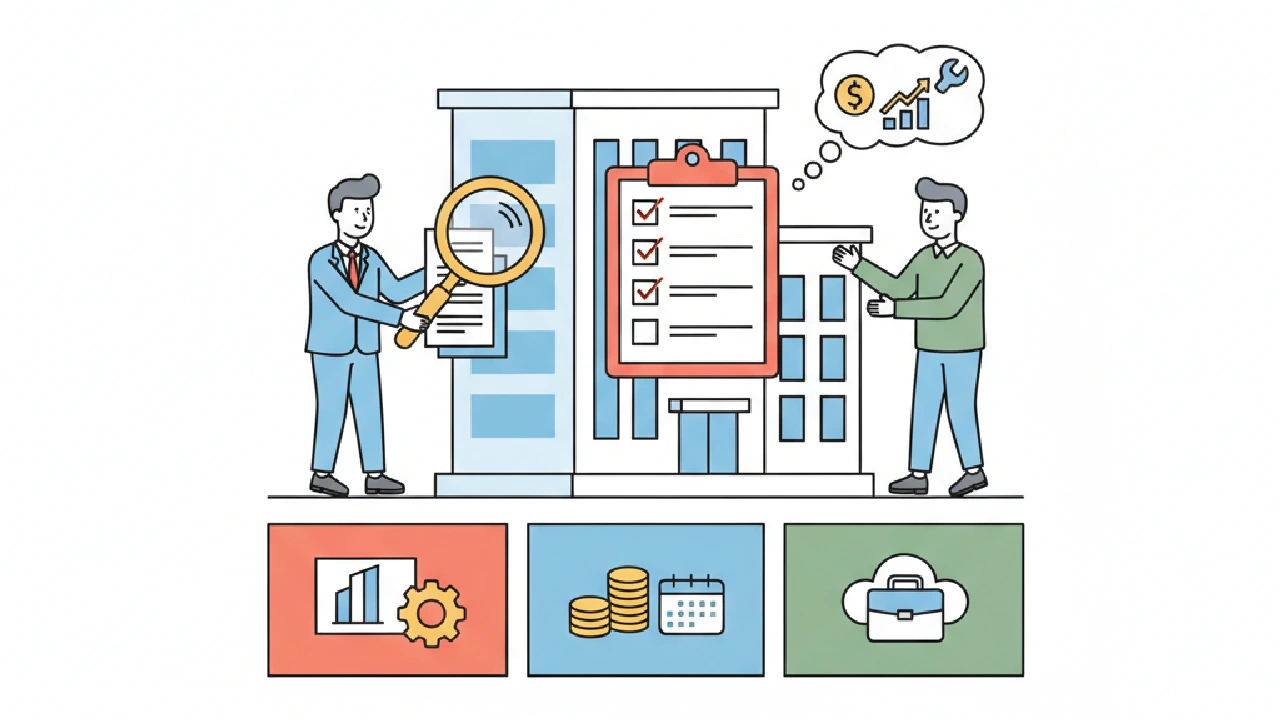
When you apply for a commercial building loan, the lender wants two things: proof that the property can carry the debt, and proof that you can manage it and stand behind it. In practice that means a property package (rent roll, trailing 12 month operating statement, purchase contract, leases and photos), a borrower package (personal financial statement, tax returns, entity documents and a real estate schedule) and, later, third party reports such as an appraisal, environmental report, title and survey. Below is a commercial real estate loan checklist you can work through before you apply. This guide is general education, not legal, tax, lending or investment advice. Have a qualified real estate attorney and your own advisors review any deal and any loan terms before you commit capital.
How do commercial building loans work?
A commercial building loan is secured by income producing or owner occupied commercial property, such as a small multifamily building, retail strip, office or industrial space. Unlike a home mortgage, the lender looks first at the property's income and the borrower's experience and finances, and the loan is usually made to the entity that will own the property. Lender types, terms and structures vary a lot, so this post sticks to what to prepare. For the differences between loan types, see our guide to types of commercial real estate loans, and for short term financing, bridge loans in commercial real estate.
Commercial real estate loan checklist: property documents
These documents show what the property earns today and what you are buying. Gather them from the seller or broker during your due diligence period, and check them before they go to a lender.
| Document | What the lender uses it for |
|---|---|
| Current rent roll | Tenants, units or suites, rents, lease dates and vacancies. See how to read a rent roll. |
| Trailing 12 month operating statement (T12) | Actual income and expenses, used to test net operating income. See what a T12 is. |
| Prior years' operating statements | Trend of income and expenses over time. |
| Copies of leases and amendments | Confirms the rent roll and shows renewal options, expense terms and any early termination rights. |
| Sources and uses summary | Loan amount requested, your equity, and what the money pays for: price, closing costs, reports and reserves. Every dollar should balance. |
| Signed purchase and sale agreement | Price, closing date and contingencies. See what a PSA covers. |
| Property description and photos | Size, year built, unit mix, parking and condition. |
| Capital improvement history and budget | Recent work and planned repairs, which affect reserves and value. |
| Real estate tax bills and insurance quotes | Two of the largest expenses in the underwriting. |
| Offering memorandum, if there is one | Background only. Lenders test its claims against the rent roll and T12, and so should you. See how to evaluate an offering memorandum. |
Commercial real estate loan checklist: borrower documents
These show who is borrowing, who is guaranteeing, and whether they can handle the property.
| Document | Why it is asked for |
|---|---|
| Personal financial statement for each principal or guarantor | Net worth and liquidity. SBA lenders use SBA Form 413, and other lenders have their own version. |
| Personal and business tax returns | Verified income. Lenders may also check returns directly with the IRS through a transcript request, and you can pull your own through IRS Get Transcript. |
| Schedule of real estate owned | Every property you own or control, with values, debt and income. It shows experience and existing obligations. |
| Entity documents | Articles of organization, operating agreement, EIN letter and good standing certificate for the borrowing entity. |
| Organizational chart and borrowing resolution | Who owns the borrower directly and indirectly, and a signed consent authorizing the entity to borrow and name its signers. |
| Proof of funds for down payment and reserves | Bank or brokerage statements showing where the equity comes from. If partners are contributing, see how to raise capital as a small sponsor. |
| Resume or track record | Ownership and management experience with similar properties. |
| Business plan for the property | What you will do after closing, such as lease up, repairs or a stabilized hold, with a budget. |
| Credit authorization | Permission for the lender to pull credit on principals and guarantors. |
If you are applying for an SBA backed loan for property your own business will occupy, expect SBA forms on top of the lender's list, such as SBA Form 1919. Read SBA's pages on 7(a) loans and 504 loans for eligibility before assuming an investment property qualifies.
Third party reports the lender orders
After you sign a term sheet or application, the lender usually orders reports, often at the borrower's cost. Ask which reports are required and who pays before you sign.
- Appraisal. For federally regulated lenders, federal rules require an appraisal by a state certified appraiser for commercial real estate transactions above $500,000, subject to listed exceptions (see 12 CFR 34.43).
- Environmental report. Many lenders want a Phase I environmental site assessment. EPA explains the standard behind it in its page on All Appropriate Inquiries.
- Property condition report. A review of roof, mechanical systems, structure and deferred maintenance.
- Title commitment and survey. Confirms ownership, liens and easements. Lenders often require a lender's title policy on ALTA forms and may require an ALTA survey.
- Tenant estoppels. On leased properties, lenders often want signed estoppel certificates that confirm each tenant's rent and lease terms match the rent roll.
- Zoning and insurance. Proof the use is allowed and evidence of property and liability coverage that names the lender.
How lenders read your package
Lenders size a loan from the property's net operating income, not from the asking price. They typically look at debt service coverage ratio (DSCR), loan to value and, for some lenders, debt yield. Each lender sets its own thresholds, so ask for them early instead of guessing. Before you apply, run the numbers yourself with the free underwriting calculator (NOI, cap rate, DSCR, cash on cash and IRR) and build a multi year view with the pro forma generator, so the lender's figures don't surprise you.
Common reasons a package stalls:
- The rent roll and leases don't match, or the T12 doesn't tie to the rent roll.
- Expenses on the seller's statements look too low next to tax bills and insurance quotes.
- The source of the down payment isn't documented.
- Entity documents are missing signatures or the entity isn't in good standing.
- The schedule of real estate owned leaves out a property that shows up on credit.
What happens after you submit your loan package?
The order varies by lender, but the steps are similar. The lender reviews your package and may issue a term sheet or letter of interest. If you accept it, you usually sign an application and pay deposits for third party reports. Underwriting then checks the reports, verifies your documents and asks follow up questions. If the deal passes, the lender issues a commitment with conditions, and the closing attorneys or title company work through those conditions alongside your purchase closing. Track every condition and date against your PSA deadlines, because a slow report can push you past a contingency date. Our commercial real estate closing checklist covers the closing side, and the due diligence checklist covers the property side.
A loan isn't the only way to fund a purchase. Some buyers use seller financing or bring in equity partners instead, each with its own tradeoffs to review with your advisors.
Keep the checklist with the deal
Loan packages fall apart when documents live in email threads. In CREflow Pro, each deal record keeps its underwriting (NOI, cap rate, DSCR and IRR), attached documents such as LOIs, leases and T12s, and a due diligence checklist with milestones and contract dates, so you can see what is still missing and when it is due. The AI offering memo import can pull an OM's property and financial details into the deal to start your first pass; try the free OM import, then compare CREflow Pro plans when you want your whole pipeline in one place.
FAQ
What is needed for a commercial loan?
Usually a property package (rent roll, T12, leases, purchase contract), a borrower package (personal financial statements, tax returns, entity documents, schedule of real estate owned, proof of funds) and third party reports such as an appraisal, environmental report and title.
How hard is it to get a commercial real estate loan?
It depends mostly on the property's income, your experience and your liquidity. A complete, consistent package makes the review faster and raises fewer questions.
How do I qualify for a commercial building loan?
Show that the property's net operating income covers the debt with room to spare under the lender's own DSCR and loan to value limits, and that the principals have the experience and finances to back the loan. Ask each lender for its requirements up front.
Do commercial lenders look at personal credit and finances?
Often yes. Lenders commonly review the credit, financial statements and tax returns of principals and any guarantors, even when the loan is made to an entity.
Who pays for the appraisal and other reports?
The borrower commonly pays for third party reports, often through deposits collected before the lender orders them. Confirm costs and refund terms in writing before you sign.
This article is general information, not legal, tax, lending or investment advice. Have a qualified attorney and your own advisors review any loan terms and documents before you sign or commit capital.